Chiari Decompression Surgery
Care Before the Procedure
- Comprehensive evaluation: MRI scans of the brain and spine are performed to confirm the diagnosis, assess severity, and check for associated conditions such as syringomyelia.Medical assessment: A detailed neurological examination and routine preoperative tests are completed to ensure the patient is fit for surgery.
- Medication review: Blood-thinning medications may need to be stopped, and other medications adjusted as advised by the surgeon.
- Patient counseling: The neurosurgical team explains the procedure, expected benefits, potential risks, and recovery process, and obtains informed consent.
Care During the Procedure
- Anesthesia and positioning: The procedure is performed under general anesthesia, with the patient positioned face-down for safe access to the back of the head and neck.
- Creating space: The surgeon removes a small portion of the skull (suboccipital craniectomy) and often part of the first cervical vertebra (C1 laminectomy) to relieve pressure.
- Dural expansion: The protective covering of the brain (dura) may be opened and expanded with a graft to improve CSF flow.
- Monitoring: Advanced imaging and neurological monitoring are used to ensure safety and adequate decompression before closing the incision.
Care After the Procedure
- Hospital recovery: Patients typically stay in the hospital for 3–5 days, with close monitoring of neurological status and pain control.
- Activity and support: A cervical collar may be used temporarily. Patients should avoid heavy lifting, bending, or twisting for several weeks.
- Rehabilitation: Physical therapy may be recommended to improve neck strength, flexibility, balance, and overall function.
- Follow-up care: Regular follow-up visits and imaging studies are scheduled to assess healing and symptom improvement. Most patients notice gradual improvement over weeks to months.
Eligibility
- Patients with a Chiari malformation confirmed on MRI
- Individuals experiencing severe headaches, neck pain, or neurological symptoms
- People with syringomyelia (spinal cord cyst) associated with Chiari malformation
- Patients whose symptoms are not relieved by medications or conservative treatments
- Comprehensive evaluation: MRI scans of the brain and spine are performed to confirm the diagnosis, assess severity, and check for associated conditions such as syringomyelia.Medical assessment: A detailed neurological examination and routine preoperative tests are completed to ensure the patient is fit for surgery.
- Medication review: Blood-thinning medications may need to be stopped, and other medications adjusted as advised by the surgeon.
- Patient counseling: The neurosurgical team explains the procedure, expected benefits, potential risks, and recovery process, and obtains informed consent.
Featured Specialities
Our Speciality Services
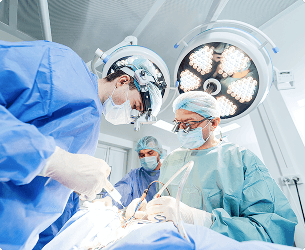
Neuro Surgery

Neuro Surgery
Our Neuro Surgery Department cares for complex conditions of the brain, spine and nervous system in both adults and children, combining advanced surgical skill with thoughtful, patient-first care. Our experienced neurosurgeons work closely with neurologists, intensivists, radiologists and rehabilitation teams to decide the best treatment path—whether surgical or non-surgical—based on what is safest and most effective for each patient. We manage brain tumours, stroke and trauma emergencies, spine disorders, vascular conditions such as aneurysms and AVMs, epilepsy and nerve pain, using modern techniques including minimally invasive and endoscopic surgery to support faster recovery.


More from KIMSHEALTH