Craniotomy
Care Before the Procedure
- Detailed evaluation: Imaging studies such as CT scans, MRI, or angiography are performed to identify the exact location and nature of the brain condition.
- Medical assessment: A full neurological and general health evaluation is completed to ensure fitness for anesthesia and surgery.
- Medication management: Blood-thinning medications may need to be stopped, and other medicines adjusted as directed by the surgical team.
- Preoperative counseling: The neurosurgeon explains the procedure, possible risks, expected outcomes, and recovery process, and obtains informed consent.
Care During the Procedure
- Anesthesia and positioning: The surgery is performed under general anesthesia, and the head is carefully positioned and stabilized.
- Access to the brain: An incision is made in the scalp, and a portion of the skull is temporarily removed to expose the brain.
- Treatment: Using advanced microsurgical techniques, the surgeon treats the underlying condition, such as removing a tumor, evacuating a blood clot, or repairing a blood vessel.
- Closure: The protective covering of the brain is closed, the bone flap is replaced and secured, and the scalp incision is sutured.
Care After the Procedure
- Intensive monitoring: Patients are closely monitored in the intensive care unit for 1–2 days to observe neurological function and vital signs.
- Hospital recovery: Total hospital stay is usually 5–7 days, depending on the condition treated and recovery progress.
- Rehabilitation: Physical, occupational, or speech therapy may be required to restore strength, mobility, or communication skills.
- Follow-up care: Regular follow-up visits and imaging studies are scheduled to monitor healing. Full recovery may take several weeks to months.
Eligibility
- Patients with brain tumors, hematomas, or abscesses requiring removal
- Individuals with brain swelling or pressure affecting neurological function
- People with vascular abnormalities such as AVMs that need repair
- Patients whose symptoms cannot be controlled with non-surgical treatments
- Detailed evaluation: Imaging studies such as CT scans, MRI, or angiography are performed to identify the exact location and nature of the brain condition.
- Medical assessment: A full neurological and general health evaluation is completed to ensure fitness for anesthesia and surgery.
- Medication management: Blood-thinning medications may need to be stopped, and other medicines adjusted as directed by the surgical team.
- Preoperative counseling: The neurosurgeon explains the procedure, possible risks, expected outcomes, and recovery process, and obtains informed consent.
Featured Specialities
Our Speciality Services
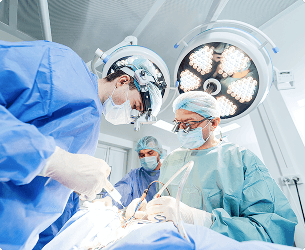
Neuro Surgery

Neuro Surgery
Our Neuro Surgery Department cares for complex conditions of the brain, spine and nervous system in both adults and children, combining advanced surgical skill with thoughtful, patient-first care. Our experienced neurosurgeons work closely with neurologists, intensivists, radiologists and rehabilitation teams to decide the best treatment path—whether surgical or non-surgical—based on what is safest and most effective for each patient. We manage brain tumours, stroke and trauma emergencies, spine disorders, vascular conditions such as aneurysms and AVMs, epilepsy and nerve pain, using modern techniques including minimally invasive and endoscopic surgery to support faster recovery.


More from KIMSHEALTH