Breast Augmentation
Care Before the Procedure
- Consultation:
- Discuss goals, implant type/size, incision placement, and positioning (above/below muscle).
- Review before-and-after photos and use 3D imaging if available to visualize potential outcomes.
- Medical Evaluation:
- Disclose medical history, medications, allergies, and previous breast surgeries.
- Baseline mammogram may be recommended for patients over 40 or with a family history of breast cancer.
- Preoperative Instructions:
- Avoid blood thinners (aspirin, NSAIDs), smoking, and alcohol for 2–4 weeks before surgery.
- Arrange for transportation and post-operative support for at least 24–48 hours.
Fasting (no food or drink) for 8 hours if general anesthesia is planned.
Care During the Procedure
- Anesthesia: Administered under general anesthesia or IV sedation.
- Process:
- Incisions are made, and pockets are created for implant placement.
- Implants are inserted and positioned symmetrically.
- Incisions are closed with sutures, and dressings are applied.
- Duration: 1–2 hours, depending on technique and complexity.
Care After the Procedure
- Immediate Recovery (First 1–2 Weeks):
- Wear a surgical bra to minimize swelling, support positioning, and promote healing.
- Manage pain and discomfort with prescribed medications.
- Avoid lifting arms overhead, strenuous activities, or sleeping on the stomach.
- Activity Resumption:
- Light activities can resume within a week; avoid heavy lifting and intense exercise for 4–6 weeks.
- Follow-Up:
- Attend post-operative appointments to monitor healing and implant placement.
- Swelling and bruising subside over several weeks; final results emerge in 3–6 months.
- Long-Term Care:
- Perform self-breast exams and schedule routine mammograms as advised.
- Silicone implants require periodic MRI screenings to detect silent ruptures (first at 5–6 years, then every 2–3 years).
- Notify future healthcare providers about implants before medical procedures.
- Note: This information is for educational purposes. Individual results vary. A consultation with a board-certified plastic surgeon is essential to discuss options, risks, and personalized recommendations.
Eligibility
- Good candidates for breast augmentation include:
Women dissatisfied with naturally small or asymmetrical breasts. - Those seeking to restore volume lost after pregnancy, breastfeeding, or significant weight loss.
- Healthy individuals with realistic expectations and stable weight.
- Non-smokers or those willing to quit before and after surgery to support healing.
- Patients without active breast disease or uncontrolled health conditions.
- Consultation:
- Discuss goals, implant type/size, incision placement, and positioning (above/below muscle).
- Review before-and-after photos and use 3D imaging if available to visualize potential outcomes.
- Medical Evaluation:
- Disclose medical history, medications, allergies, and previous breast surgeries.
- Baseline mammogram may be recommended for patients over 40 or with a family history of breast cancer.
- Preoperative Instructions:
- Avoid blood thinners (aspirin, NSAIDs), smoking, and alcohol for 2–4 weeks before surgery.
- Arrange for transportation and post-operative support for at least 24–48 hours.
Fasting (no food or drink) for 8 hours if general anesthesia is planned.
Featured Specialities
Our Speciality Services
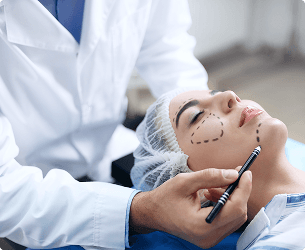
Plastic Surgery

Our Department of Plastic, Reconstructive & Microvascular Surgery offers comprehensive care for both functional and cosmetic needs, handling routine aesthetic procedures as well as complex reconstructions that other centres may refer to. Our surgeons are trained in microvascular “free tissue transfer” for head and neck reconstruction. We treat congenital differences, trauma and burns, cancer-related defects, hand conditions and complex vascular problems, and provide a full suite of cosmetic options from rhinoplasty and eyelid surgery to liposuction and non-surgical skin treatments. Supported by a craniofacial unit, dedicated burn services, lymphedema care and specialist operating theatres, the team works closely with oncologists, ENT, maxillofacial and rehabilitation specialists to plan each case.


More from KIMSHEALTH