Facelift (Rhytidectomy)
Care Before the Procedure
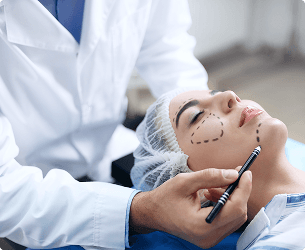
- Meticulous planning is essential for safety and optimal results.
- Consultation: A detailed discussion with the surgeon about goals, the specific technique, and potential risks. Computer imaging may be used.
- Medical Evaluation: A thorough review of medical history, medications (especially blood thinners), and any conditions that could affect healing or anesthesia.
- Preoperative Instructions:
- Stop smoking and avoid certain medications and supplements that can increase bleeding (e.g., aspirin, NSAIDs, vitamin E) for several weeks.
- Arrange for help at home for at least the first week and for transportation.
- Preparing Your Space: Prepare a comfortable recovery area with extra pillows to keep your head elevated.
Care During the Procedure
- The surgery is performed in an accredited surgical facility or hospital.
- Anesthesia: Usually performed under general anesthesia or local anesthesia with intravenous sedation, ensuring patient comfort.
- The Process: The surgeon makes the planned incisions, repositions and tightens underlying tissues, trims excess skin, and closes the incisions with fine sutures. Drains may be placed to prevent fluid buildup.
- Duration: The procedure typically takes 2 to 5 hours, depending on the extent of surgery and whether other procedures (like a neck lift or eyelid surgery) are performed simultaneously.
Care After the Procedure
- A structured recovery process is critical for healing and achieving the desired result.
- Immediate Recovery (First 1-2 weeks):
- Bandages: A bandage may be wrapped around your face to minimize swelling and bruising.
- Drains & Sutures: Drains, if used, are removed a day or two after surgery. Sutures are typically removed in stages over 1-2 weeks.
- Swelling & Bruising: This is expected and peaks around days 2-3. Keeping your head elevated, even while sleeping, is crucial to reduce swelling.
- Pain Management: Discomfort is managed with prescribed medication. Numbness and tightness are common.
- Activity: Rest is imperative. Avoid bending over, straining, or any strenuous activity.
- Mid-Term Recovery (Weeks 3-6):
- Most bruising and significant swelling will subside. Many people feel comfortable returning to social activities and non-strenuous work after 2-3 weeks.
- Continue to avoid activities that increase blood pressure or risk of impact to the face.
- Long-Term Recovery & Results:
- Final Results: While you will see a noticeable improvement early on, the final result emerges gradually as residual swelling fully resolves. This can take several months.
- Scarring: Incision lines will fade over many months to become much less visible and are strategically placed to be concealed.
- Sun Protection: Protecting your skin from the sun is crucial for healing and maintaining results.
- Longevity: A facelift does not halt aging, but the results are long-lasting. Patients typically appear younger compared to their preoperative aging trajectory. A healthy lifestyle will help maintain results.
- Disclaimer: This information is for educational purposes only. Individual results vary. A consultation with a board-certified plastic surgeon is essential to determine if you are a candidate for a facelift and to discuss the specific techniques, risks, and benefits based on your individual anatomy and goals.
Eligibility
- Good candidates for a facelift are generally:
Individuals with significant sagging skin in the face and neck, deep creases, and jowls. - Those with good skin elasticity and underlying bone structure to support the new contours.
- Healthy non-smokers without medical conditions that impair healing.
- Individuals with realistic expectations about what the surgery can achieve.
- Typically, patients are in their 40s to 70s, though it varies based on individual aging.
- Meticulous planning is essential for safety and optimal results.
- Consultation: A detailed discussion with the surgeon about goals, the specific technique, and potential risks. Computer imaging may be used.
- Medical Evaluation: A thorough review of medical history, medications (especially blood thinners), and any conditions that could affect healing or anesthesia.
- Preoperative Instructions:
- Stop smoking and avoid certain medications and supplements that can increase bleeding (e.g., aspirin, NSAIDs, vitamin E) for several weeks.
- Arrange for help at home for at least the first week and for transportation.
- Preparing Your Space: Prepare a comfortable recovery area with extra pillows to keep your head elevated.
Featured Specialities
Our Speciality Services
Plastic Surgery

Our Department of Plastic, Reconstructive & Microvascular Surgery offers comprehensive care for both functional and cosmetic needs, handling routine aesthetic procedures as well as complex reconstructions that other centres may refer to. Our surgeons are trained in microvascular “free tissue transfer” for head and neck reconstruction. We treat congenital differences, trauma and burns, cancer-related defects, hand conditions and complex vascular problems, and provide a full suite of cosmetic options from rhinoplasty and eyelid surgery to liposuction and non-surgical skin treatments. Supported by a craniofacial unit, dedicated burn services, lymphedema care and specialist operating theatres, the team works closely with oncologists, ENT, maxillofacial and rehabilitation specialists to plan each case.


More from KIMSHEALTH